Why Are My Homemade Pancakes Flat, and How Can I Make Them Fluffy?
You wake up on a Saturday, craving those tall, golden-brown pancakes you see in magazines, the ones that seem to defy gravity with their airy structure. You pull out your favorite recipe, mix the batter, and pour it onto the griddle with hopeful anticipation. But then, disappointment. Your pancakes bubble, they flip, and they land on the plate… flat. Limp. Delicious enough, sure, but far from the cloud-like stacks you envisioned. If this scenario sounds painfully familiar, you’re not alone. Many home cooks struggle to achieve that coveted fluffiness, often making subtle errors that lead to dense, disk-like results. I’ve spent years perfecting my pancake game, and what I’ve discovered is that the difference between flat and fluffy often comes down to a few overlooked details, not a secret ingredient you’re missing.
Key Takeaways
- Overmixing pancake batter develops gluten, leading to a tough, flat texture instead of a light, airy one.
- Relying solely on baking powder often yields inconsistent results; a combination of baking powder and baking soda creates optimal lift.
- Letting your batter rest for 10-15 minutes allows ingredients to hydrate and activators to begin their work, crucial for fluffy pancakes.
- Adjusting batter thickness with milk or flour is essential, as too-thin batter spreads excessively and too-thick batter bakes dense.
Overmixing Your Batter Is Sabotaging Fluffiness
The single biggest mistake I see most often in pancake making is overmixing the batter. It’s a natural instinct to want a perfectly smooth, uniform batter, free of any lumps. But when it comes to pancakes, those lumps are your friends. Flour contains gluten, a protein that develops elasticity and strength when agitated with liquid. In baked goods like bread, gluten development is desirable, creating that satisfying chew. In pancakes, however, too much gluten makes for a tough, dense, and ultimately flat pancake.
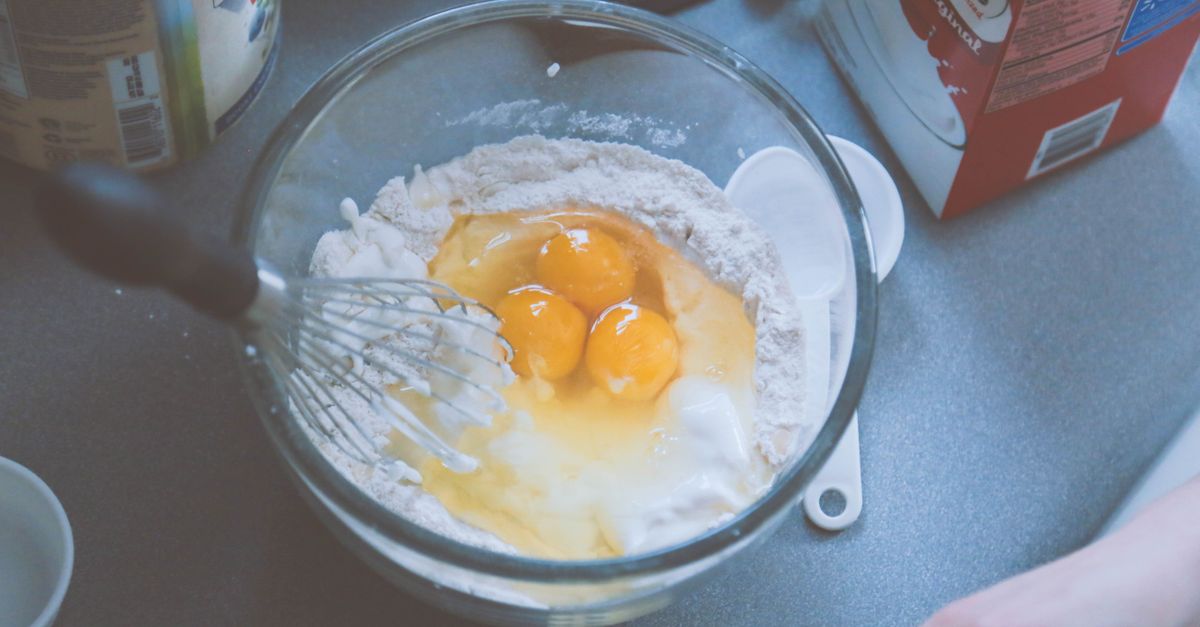
When I first started baking, I’d whisk my pancake batter until it was silky smooth, convinced this was the path to perfection. What I got were pancakes that were more like thin, rubbery crepes. What changed everything for me was learning to embrace the lumps. Now, I mix my dry ingredients (flour, sugar, leavening agents, salt) in one bowl and my wet ingredients (milk, eggs, melted butter or oil, vanilla) in another. Then, I pour the wet into the dry and mix just until the dry ingredients are moistened. There will still be small lumps of flour, and that’s exactly what you want. A few quick stirs, and then you stop. Seriously, stop. This minimal mixing prevents excessive gluten formation, allowing the leavening agents to do their job, creating air pockets that expand into that lovely fluffy texture.
To illustrate, think of it like this: imagine trying to inflate a balloon made of thick, unyielding rubber versus one made of delicate, pliable latex. The leavening gases are trying to inflate your pancake batter. If the batter is stiff from overdeveloped gluten, it’s like the thick rubber balloon – it resists expansion. If the batter is loosely bound with minimal gluten, it’s like the pliable latex – it expands easily, leading to a lighter, airier result. This simple shift in mixing technique alone will elevate your pancake game significantly.
You Might Be Underutilizing Leavening Agents
Many recipes call for just baking powder, and while it’s a good start, in my experience, relying solely on baking powder can lead to inconsistent results and less dramatic lift. For truly fluffy pancakes, a dynamic duo of baking powder and baking soda is often the secret. Here’s why:
Baking powder is a double-acting leavening agent. It releases some carbon dioxide gas when it gets wet (when mixed into the batter) and then a second burst of gas when it’s exposed to heat (on the griddle). This is great for an initial lift. However, baking soda requires an acid to activate. When combined with an acidic ingredient commonly found in pancake recipes (like buttermilk, yogurt, or even brown sugar, which is slightly acidic), baking soda reacts to produce additional carbon dioxide gas. This extra burst of bubbles contributes significantly to the pancake’s rise and tender crumb.
For my go-to fluffy pancake recipe, I typically use 1 teaspoon of baking powder and ½ teaspoon of baking soda for every 1.5 cups of flour, along with either buttermilk or a splash of vinegar added to regular milk. The reaction between the baking soda and the acid creates a flurry of small bubbles that get trapped in the batter. When the pancake hits the hot griddle, the heat causes these trapped gases to expand further, leading to a much higher, fluffier pancake than baking powder alone could achieve. If your recipe only calls for baking powder, try adding ½ teaspoon of baking soda and using buttermilk or adding 1 tablespoon of white vinegar to your regular milk and letting it sit for five minutes before adding to the dry ingredients. This simple tweak provides a noticeable difference in volume and tenderness.
Skipping the Batter Rest Time Costs You Loft
I used to be impatient. Mix the batter, preheat the griddle, and start pouring. This hurried approach, however, often resulted in pancakes that were still somewhat flat. What I discovered was that skipping the batter rest time costs you valuable loft and tenderness. Think of it as giving your ingredients a moment to get acquainted and do their preparatory work.
After mixing your batter (remembering to keep it lumpy!), let it sit at room temperature for at least 10 to 15 minutes. This rest period serves a few critical functions:
- Hydration: The flour has time to fully absorb the liquid, ensuring a more uniform consistency and preventing dry spots. This makes for a more tender pancake.
- Gluten Relaxation: Any gluten that did develop during the minimal mixing has a chance to relax. This makes the batter more pliable and allows it to rise more easily.
- Leavening Activation: The leavening agents (baking powder and baking soda) begin their initial chemical reactions, producing carbon dioxide bubbles. These nascent bubbles are crucial for the pancake’s structure.
When you pour the batter onto the hot griddle after it has rested, these pre-existing bubbles are ready to expand rapidly with the heat, giving you that impressive rise. If you cook the batter immediately, the leavening agents don’t have enough time for their initial activation, and the gluten hasn’t relaxed, resulting in a pancake that struggles to puff up. In my experience, a rested batter not only produces fluffier pancakes but also ones with a more consistent, tender texture throughout. It’s a small waiting period that yields significant rewards.
Your Batter Might Be the Wrong Consistency
While overmixing is about how you combine ingredients, the overall consistency of your batter plays a huge role in pancake fluffiness. A batter that is too thin will spread excessively on the griddle, resulting in wide, flat pancakes. Conversely, a batter that is too thick will be dense and heavy, failing to rise properly.
When I first started making pancakes, I’d follow recipes to the letter, but sometimes my pancakes were still off. I learned that variations in flour type, humidity, and even how firmly you pack your flour can slightly alter the ideal liquid-to-dry ratio. The mistake I see most often is not trusting your eyes and adjusting as needed.
The ideal pancake batter consistency is somewhere between thick cream and melted ice cream. It should be thick enough to hold its shape somewhat when spooned onto the griddle, but still pourable. When you lift your spoon or whisk from the batter, it should slowly drip off in ribbons, rather than running off quickly or clinging in a thick blob.
If your batter seems too thick, add milk one tablespoon at a time, stirring gently after each addition until you reach the desired consistency. If it’s too thin, you can carefully whisk in a tablespoon or two of extra flour. Remember, a perfectly balanced consistency allows the leavening gases to expand upwards rather than outwards, giving you that satisfying stackable thickness. This hands-on adjustment is a skill that comes with practice, but it’s essential for consistent, fluffy results.
Overcrowding the Griddle Leads to Steam, Not Rise
Another subtle but impactful mistake that can hinder fluffiness is overcrowding your griddle. It’s tempting to want to cook as many pancakes as possible at once, especially when you have hungry mouths to feed. However, throwing too many pancakes onto the cooking surface simultaneously has an unintended consequence: it lowers the griddle’s temperature and creates excess steam.
When the griddle temperature drops significantly, the pancakes don’t get that initial, rapid heat shock needed for the leavening agents to kick into high gear and for the batter to set quickly. Instead of rising quickly, they cook more slowly, giving them more time to spread outwards before they can set. The steam released from too many pancakes cooking at once also contributes to a wetter cooking environment, which can prevent the exterior from forming that crisp, structural crust that helps support the pancake’s height.
In my kitchen, I’ve learned that cooking pancakes in smaller batches, typically two to three at a time on a standard-sized griddle, is far more effective. This ensures that the griddle maintains a consistent, high temperature (around 350-375°F or 175-190°C is ideal), allowing each pancake to cook efficiently and puff up as it should. Leave at least an inch or two of space between each pancake. Yes, it takes a bit longer overall, but the quality of the pancakes – their golden hue, tender interior, and impressive stackability – is dramatically improved. It’s a trade-off that is absolutely worth it for a truly superior breakfast.
Frequently Asked Questions
How do I know when to flip my pancakes for maximum fluffiness?
Wait until you see plenty of bubbles forming on the surface of the pancake and the edges begin to look set and dry. The bubbles are a sign that the leavening agents are actively working and creating air pockets. Flipping too early can deflate these bubbles and result in a flatter pancake. A perfectly timed flip will show a golden-brown underside that is ready to finish cooking on the other side.
Can I make pancake batter ahead of time and store it in the fridge?
While it’s convenient, I generally advise against making pancake batter too far in advance if fluffiness is your top priority. The leavening agents, especially baking soda, begin their reaction once wet. Over time, these gases dissipate, leading to a less effective rise. If you must prep ahead, keep the wet and dry ingredients separate and mix them just before cooking. If you’ve already mixed the batter, you can store it for a few hours in the fridge, but expect a slight reduction in fluffiness.
What kind of flour is best for fluffy pancakes?
All-purpose flour is typically ideal for fluffy pancakes. Its moderate protein content allows for some structure without developing too much gluten, which would lead to a tougher pancake. While you can use other flours, be aware that whole wheat flour, for instance, has more gluten and fiber, often resulting in a denser texture unless adjusted with additional liquid and leavening.
My pancakes are still not fluffy. What else could be wrong?
Beyond the common issues, ensure your leavening agents (baking powder and baking soda) aren’t expired. They lose potency over time, severely impacting rise. You can test baking powder by adding a teaspoon to a cup of hot water; it should bubble vigorously. For baking soda, add ¼ teaspoon to a couple of tablespoons of vinegar; it should also bubble strongly. Also, avoid pressing down on your pancakes with a spatula while they cook, as this will press out all the precious air bubbles.
Getting fluffy pancakes consistently at home is a skill, not a mystery. By understanding the common pitfalls of overmixing, inadequate leavening, insufficient rest time, incorrect batter consistency, and overcrowding the griddle, you can transform your breakfast experience. Focus on these actionable steps: mix gently, use both baking powder and baking soda (especially with an acidic liquid), give your batter a proper rest, adjust the thickness as needed, and cook in sensible batches. Start with one change, like mindful mixing, and you’ll immediately notice a difference. Your journey to perfect, stackable, cloud-like pancakes starts now – go forth and conquer your griddle!
Written by Liam O'Connell
Productivity, Time Management, Personal Finance
A former project manager turned freelance writer, Liam is obsessed with productivity systems and simplifying complex tasks.
You Might Also Like
The 20-Degree Rule for Home Heating and Cooling: Why Most Advice Misses the Mark
Discover why the conventional 20-degree rule for home heating and cooling often fails, and learn a more effective, personalized approach to energy savings and comfort.

5 Counterintuitive Reasons Your Smart TV Is Slower Than Advertised
Smart TVs often underperform their advertised speed. Discover five non-obvious reasons your smart TV feels sluggish and how to fix them.

A Beginner's Guide to Avoiding Common Home Composting Pitfalls
Learn the overlooked mistakes in home composting and how to create nutrient-rich soil effectively, reducing waste and boosting your garden.